
How Much Should a Small Business Spend on Marketing in Australia?
And are you investing enough to achieve the growth you're expecting?
It's one of the most common questions business owners ask: How much should I actually be spending on marketing?
If you're wondering how much a small business should spend on marketing in Australia, you're certainly not alone.
And while I'd love to give you one magic number, the answer depends on your business, your goals and where you're at in your growth journey.
One thing I see often is businesses wanting to increase bookings, generate more leads, grow their audience and build brand awareness, but without a small business marketing budget that realistically supports those ambitions.
The truth is, effective marketing requires more than the occasional social media post or a few hundred dollars in advertising.
It requires a plan, consistency and an understanding of where your money is going.
How much should a small business spend on marketing?
As a general guide, 5–10% of annual revenue is a commonly used starting point for marketing budgets, although this can vary significantly depending on your industry, business stage and growth objectives.
When considering your marketing budget as a percentage of revenue, it's important to look at both your current business performance and your future growth ambitions.
For example:
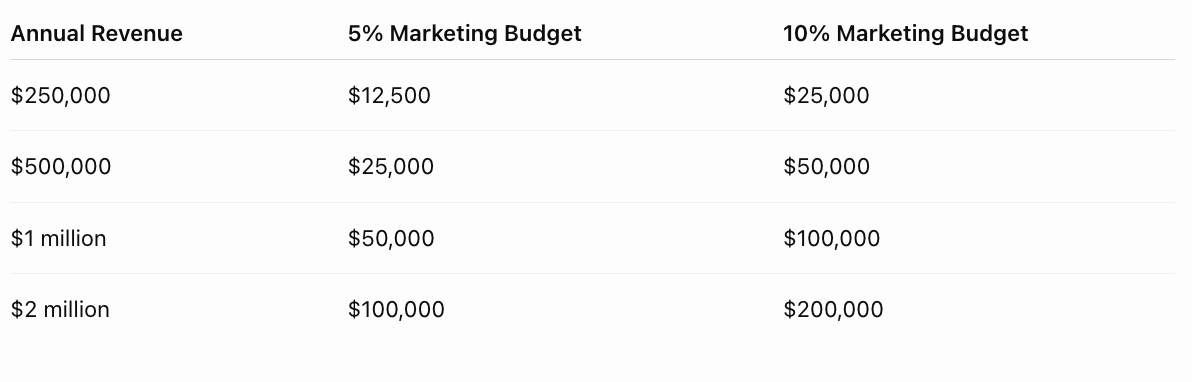
These figures aren't a recommendation for every business, but they offer a useful starting point when planning your annual marketing budget.
A new business trying to establish itself may need to invest more heavily in awareness and customer acquisition. An established business with a loyal customer base and strong organic visibility may be able to achieve its goals with a smaller percentage.
The important thing is understanding what you're trying to achieve and what it's realistically going to take to get there.
What should your small business marketing budget include?
When business owners think about their marketing budget, they often focus on how much they're spending on Meta or Google Ads.
But advertising is only one piece of the puzzle.
A well-planned marketing budget for a small business should also account for:
Marketing strategy and planning: Developing campaigns, identifying opportunities and making sure your marketing activity supports your business goals.
Social media marketing and content creation: Building brand awareness, showcasing your offering and connecting with your ideal audience.
Email marketing: Nurturing existing customers, encouraging repeat business and staying front of mind.
SEO and website optimisation: Helping potential customers discover your business organically through search engines.
Paid advertising: Reaching new audiences, generating enquiries and driving conversions through platforms such as Meta and Google.
Brand partnerships and content creators: Expanding your reach through aligned collaborations.
Marketing management and reporting: Coordinating activity, reviewing performance and making improvements.
Not every business needs to invest in every channel. In fact, trying to do everything with a limited budget can often mean doing nothing particularly well.
I'd much rather see a business invest strategically in three channels than spread its budget thinly across eight.
Your marketing investment should reflect your business goals
This is where I think many businesses get stuck.
They set a marketing budget based on what feels affordable, rather than working backwards from what they're trying to achieve.
Let's say you manage luxury holiday properties.
Your goals might be to increase direct bookings, fill quieter periods, attract new guests and encourage previous guests to return.
Your holiday accommodation marketing strategy could include targeted Meta advertising, SEO to capture people actively searching for accommodation, email campaigns to your existing database and collaborations with aligned content creators.
Now compare that with a boutique wellness studio looking to increase memberships.
It’s marketing priorities might look completely different, with more focus on local awareness, lead generation, referral campaigns and automated email nurturing.
Both businesses need marketing, but they don't necessarily need the same marketing budget or channel mix.
The right question isn't simply "How much should I spend?" It's "What do I need my marketing to achieve?"
How to create a marketing budget for your small business
If you're unsure how to create a marketing budget, the best place to start is with your business goals rather than choosing an arbitrary monthly figure.
Here are four steps I'd recommend.
1. Define your marketing goals
What do you want your business to achieve over the next 12 months?
Are you looking to increase revenue, generate more enquiries, attract new customers, improve occupancy or encourage repeat business?
Your goals will help determine where your marketing investment should be focused.
2. Review your current marketing spend
Look at everything you're currently investing in marketing, including advertising, content creation, social media management, email marketing, SEO, subscriptions and external contractors.
You might be surprised by how much you're already spending when everything is added together.
3. Prioritise your marketing channels
Rather than trying to be everywhere, focus on the channels most likely to help you achieve your business goals.
For some brands, that might be SEO and email marketing. For others, paid advertising, social media and content creators may be more effective.
The key is developing a small business marketing strategy that supports your goals and available resources.
4. Measure and refine your budget
Your marketing budget shouldn't be something you set once and forget.
Review performance regularly, identify which channels are delivering results and adjust your investment accordingly.
A flexible, considered approach to marketing budget planning will help you make more informed decisions throughout the year.
Don't overlook the value of your existing customers
It's easy to get caught up in constantly trying to reach new people.
But some of your best marketing opportunities may already be sitting in your database.
For accommodation brands, this could mean encouraging previous guests to book another stay, promoting seasonal offers or introducing new properties.
For wellness and service-based businesses, it might mean nurturing existing customers, increasing repeat appointments or introducing new services.
Email marketing and customer retention strategies can be incredibly valuable, particularly when compared with the ongoing cost of acquiring new customers.
If you're investing in attracting new customers but doing very little to nurture the ones you already have, there may be an opportunity to get more from your existing marketing budget.
Before increasing your marketing budget, look at what's already working
Spending more doesn't automatically mean better results.
Before recommending that a business increase its marketing investment, I like to look at where its current budget is going.
Are paid campaigns generating meaningful enquiries or bookings?
Is social media driving people to the website?
Are email subscribers engaging with campaigns?
Which products, services or properties need additional support?
Are we investing in the right channels, or simply continuing activity because it's what we've always done?
Sometimes the biggest opportunity isn't spending more. It's reallocating your existing budget to the areas with the greatest potential.
And importantly, making sure you have the right marketing reporting and performance tracking in place to measure the results.
Why consistent marketing is important for business growth
One of the biggest challenges I see is businesses treating marketing as something they switch on when things get quiet.
Bookings slow down, so they run an ad.
Enquiries drop, so they start posting more frequently.
Memberships plateau so they run a new member offer.
Then things pick up, and marketing takes a back seat again.
The problem is that building brand awareness, organic visibility and customer relationships takes time.
A consistent marketing strategy helps keep your business front of mind, even when customers aren't ready to purchase or book immediately.
That doesn't mean spending the same amount every month. Particularly for seasonal businesses, there are times when it makes sense to increase or reduce investment.
But having an ongoing strategy means you're being proactive rather than constantly reacting.
So, is your business spending enough on marketing?
If you're unsure whether your marketing budget is working hard enough, I'd suggest starting with three questions:
What are your business goals for the next 12 months? More revenue, more bookings, increased brand awareness, customer retention or a combination?
Where is your current marketing budget going? Look at your total investment, including advertising, content, contractors, tools and management.
Can you clearly identify what's delivering results? If not, improving your reporting and tracking may be the first priority.
From there, you can start building a marketing budget that's aligned with your business goals, rather than choosing an arbitrary monthly figure.
Final thoughts: Making your marketing budget work harder
There's no one-size-fits-all answer to how much a small business should spend on marketing in Australia.
But there should always be a clear connection between your investment, your strategy and what you're hoping to achieve.
You don't necessarily need to be everywhere, do everything or have the biggest budget.
You need to be intentional about where you invest, understand what's working and commit to showing up consistently.
At Golden Days Marketing, I work with accommodation, wellness, lifestyle and service-based brands to bring their marketing together — from strategy and campaign planning to content, email, SEO and brand partnerships.
If you're unsure where to focus your marketing budget, or simply need someone to help bring all the moving pieces together, I'd love to chat.